This repository contains foundation-level, course-based assignments completed as part of a structured coding programme, focusing on building strong fundamentals across JavaScript, SQL, and API development. Each project applies theoretical concepts to practical, real-life scenarios while following best practices in code structure, documentation, and version control.
These assignments form the building blocks for a larger end-to-end full-stack group project, completed later in the programme. That final project integrates frontend, backend, and database functionality into a single production-style application.
🔒 The final group project repository currently exists as a private repository:
Final Group Project (End-to-End Full-Stack)
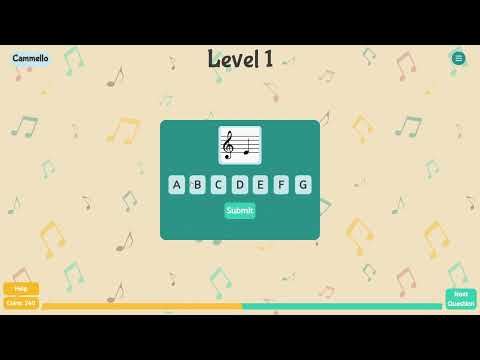
Music Theory Learning App — link will be made public once available.
Watch a 5-minute walkthrough of the full-stack group project:
Through this foundation module, I gained hands-on experience in:
- Front-end development using JavaScript, HTML, and CSS
- Relational database design and querying with SQL and MySQL
- Backend development and RESTful APIs using Node.js and Express.js
- Git and GitHub workflows, including branching, pull requests, and documentation
The projects included in this repository are:
- JavaScript Web App – interactive UI logic and DOM manipulation
- SQL Database Project – normalized relational database with real-life use cases
- RESTful API – backend service integrating Express.js and MySQL for CRUD operations
This assignment focused on building a creative web app using JavaScript, HTML, and CSS. The main goal was to demonstrate knowledge of JavaScript constructs, DOM manipulation, and event handling while applying best coding practices.
A fun interactive web app where users select their preferred perfume notes (top, middle, base) and get a recommendation from a list of perfumes. The page updates dynamically based on user input, and visual cues like background color changes are applied.
- Handling user input and dynamically updating the web page
- Using arrays, loops, boolean logic, and functions
- Applying object methods and DOM events
- Understanding array methods (unshift(), shift(), split())
- Using Git and GitHub for version control
- Used consistent formatting, comments, and meaningful variable names
- Added event listeners for user interactions
- Added emojis to represent perfume notes for better UX
- Added console.log() for debugging user input and results
- Moved the perfumes array outside of the function for better scope management
- Styled container with rounded borders, shadows, and color accents
- Simple responsive layout for input forms and recommendations
- Background color changes to enhance user interaction
This assignment focused on designing and implementing a creative relational database using MySQL. The goal was to demonstrate knowledge of database design, SQL commands, and data manipulation while applying best coding practices.
A database for a sneaker store selling popular footwear brands like Nike, Adidas, Reebok, Vans, and Puma. The database includes tables for footwear, customers, sales, and sales items, allowing the store to track stock, customer purchases, and sales trends.
- Creating normalized relational databases with multiple tables
- Using primary and foreign keys to link tables effectively
- Writing queries to insert, retrieve, update, and delete data
- Using aggregate functions, joins, built-in functions, and stored procedures
- Implementing real-life scenarios for data analysis and reporting
-
Tables: footwear, customers, sales, sales_items
-
Primary/foreign keys:
-
footwear.sneaker_id (PK)
-
customers.customer_id (PK)
-
sales.sales_id (PK), linked to customers.customer_id
-
sales_items.sales_item_id (PK), linked to sales.sales_id and footwear.sneaker_id
-
-
Data types: INT, VARCHAR, DECIMAL, DATETIME
-
Constraints: NOT NULL, UNIQUE, DEFAULT values
-
Populated data: At least 8 rows per table, including mock data for customers, footwear, and sales
CREATE TABLE footwear (
    sneaker_id INT PRIMARY KEY,
    name VARCHAR(200) NOT NULL,
    brand VARCHAR(50) NOT NULL,
    colour VARCHAR(50) NOT NULL,
    size INT NOT NULL,
    price DECIMAL(10,2) NOT NULL,
    stock INT DEFAULT 0
);

-- Insert sample data
INSERT INTO footwear (sneaker_id, name, brand, colour, size, price, stock)
VALUES (3001, 'Nike Air Rift', 'Nike', 'Black', 4, 120.00, 4),
       (3002, 'Nike Air Rift', 'Nike', 'Black', 5, 120.00, 5);
Cleaning and correcting data:
SELECT TRIM(last_name) AS updated_last_name FROM customers;

-- Delete incorrect customer
DELETE FROM customers WHERE first_name = 'Jenn';
Data retrieval and sorting:
SELECT name, brand, colour, price
FROM footwear
WHERE price >= 100
ORDER BY price DESC;

-- Top 3 customers by total purchase
SELECT c.first_name, s.quantity, s.total_price
FROM customers c
INNER JOIN sales s ON c.customer_id = s.customer_id
ORDER BY s.total_price DESC
LIMIT 3;
Using joins and built-in functions:
SELECT UPPER(f.brand) AS brand_name, si.sales_id, si.sneaker_id
FROM footwear f
RIGHT JOIN sales_items si ON f.sneaker_id = si.sneaker_id
ORDER BY brand_name ASC;
Trending sneakers daily:
CREATE PROCEDURE trending_sneakers_daily()
BEGIN
  SELECT si.sneaker_id, f.brand, f.name, f.size, COUNT(f.name) AS total_sold
  FROM sales_items si
  JOIN sales s ON si.sales_id = s.sales_id
  JOIN footwear f ON si.sneaker_id = f.sneaker_id
  GROUP BY si.sneaker_id
  ORDER BY total_sold DESC;
END //
DELIMITER ;

CALL trending_sneakers_daily();
Update stock daily:
CREATE PROCEDURE update_stock_daily()
BEGIN
  SELECT si.sneaker_id, f.brand, f.name, f.size, f.stock,
         SUM(f.stock) - SUM(s.quantity) AS updated_stock
  FROM footwear f
  JOIN sales_items si ON si.sneaker_id = f.sneaker_id
  JOIN sales s ON si.sales_id = s.sales_id
  GROUP BY si.sneaker_id, f.brand, f.name, f.size, f.stock;
END //
DELIMITER ;

CALL update_stock_daily();
- Code is neat and easy to read with comments explaining purpose
- Creative scenario of a sneaker store with real-life usage
- Applied all required SQL constructs: joins, aggregates, built-in functions, stored procedures, constraints
- Proper naming conventions and consistent formatting
Developed a RESTful API to manage customer orders for a blind box store. The API tracks the full order lifecycle—from order creation to updates, deletion, and retrieval—integrating with a MySQL database for data storage and management.
The API supports Blind Box figurine orders, where each order includes customer details, order items, total price, shipping date, and order status. The API simulates real-life scenarios such as creating a new order, updating order status, deleting orders, and tracking stock levels.
- Structuring an Express.js server and implementing RESTful endpoints
- Connecting Node.js with MySQL and executing SQL queries in a backend environment
- Handling HTTP status codes, error handling, and input validation
- Using environment variables for secure credentials and configuration
- Best practices for clean, readable code and project documentation
- Node.js, Express.js
- MySQL, dotenv
- Postman for testing API endpoints
- Implemented CRUD operations for customer orders, including creating, reading, updating, and deleting orders
- Designed endpoints with proper status codes and messages for success and error scenarios
- Used SQL queries with placeholders to prevent injection attacks
- Added an additional endpoint to update stock and track orders using stored procedures
- Documented the API and provided example workflows for real-life usage
app.post("/order", (req, res) => {
  const { blind_box_name, customer_name, email, total_price } = req.body;
  const sql = "INSERT INTO customer_order(blind_box_name, customer_name, email, total_price) VALUES (?, ?, ?, ?)";
  pool.query(sql, [blind_box_name, customer_name, email, total_price], (err, result) => {
    if (err) return res.status(500).json({ error: "Database error" });
    res.status(201).json({ order_id: result.insertId, message: "Order received successfully" });
  });
});
- Endpoints implement proper RESTful principles with status codes and messages
- Code is neat, readable, and well-documented
- Real-life scenario for a blind box store with order lifecycle and stock tracking
- Environment variables used to secure sensitive data